Introduction to Captive Solar Power Plants
As energy costs soar and sustainability becomes a boardroom priority, industries in 2026 are no longer just exploring green alternatives; they’re investing in them decisively. One solution rising to the top is Captive Solar Power Plants.
It’s not just about reducing electricity bills anymore; it’s about energy independence, long-term cost control, and meeting ESG and compliance goals without compromising on reliability.
In 2026, industries are rapidly moving away from grid dependency by adopting Captive Solar Power Plants. This shift unlocks major economic and strategic benefits. In this blog, we explore why this is the smartest energy move for industrial players and why the time to act is now.
What is Captive Solar Power?
A captive solar power plant is a solar energy system created to generate electricity primarily for the owner. It is an independent energy source that allows businesses to control their power supply and expenses.
It is also known as an on-site or behind-the-meter solar facility.
Some main key benefits of it are:
- It is cost-efficient as compared to grid electricity.
- It is a self-sustaining source of energy.
- It offers attractive returns on investment, particularly in areas with high electricity costs.
Why It’s Gaining Popularity in 2026?
1. Cost Savings and Financial Incentives
It saves a lot of money and energy. As the cost of electricity is increasing, the cost of renewable energy remains the same.
The government of India provides incentives to businesses that use renewable energy instead of electricity. They also provide subsidies, which make them more affordable and attractive.
2. Technological Advancements in Solar Energy
Recent innovations include energy storage integration, improved solar panel efficiency, and the adoption of innovative grid technologies, which make solar power more reliable and scalable.
People Also Read: Captive Solar vs Open Access Solar
Key Benefits of Captive Solar Power Plants for Industries
1. Lower Electricity Bills
The consumption cost of solar energy is very low compared to electricity. The cost of solar energy in India can range from ₹2.30 to ₹3.50 per kilowatt-hour (kWh), which, in comparison to electricity cost, typically ranges from ₹3.05 to ₹6.30 per kWh.
2. Energy Reliability and Independence
The usage of Captive solar energy creates reliable energy, which is then used by businesses. It also creates independence as it is designed to generate electricity primarily for the use of the business or owner.
3. ESG Alignment and Sustainability Goals
It highlights that renewable energy, like solar, reduces carbon emissions and fulfils long-term sustainability objectives.
It also helps achieve sustainability goals like net-zero targets or improve environmental performance ratings.
Leading Sectors in Captive Solar Power Plant Market
Sectors like manufacturing, IT, and heavy industries usually rely on this energy source due to its reduced power costs, secured uninterrupted electricity, and ability to meet decarbonization targets.
In India, industrial captive generation capacity exceeds 11,000 MW, largely concentrated in states with high solar irradiance and supportive open-access captive policies in Gujarat and Maharashtra.
Challenges of Captive Solar Power Plants
Even with all these benefits, some limitations are holding it back. These are some of them.
1. Regulatory Complexities
Permits, navigating region-specific energy regulations, and compliance requirements can be time-consuming.
2. High Initial Capital Investment
The usage cost of these captive solar power plants is very low, but the manufacturing and application costs are very high, making their initial cost high.
3. Maintenance and Performance Monitoring
Ensuring consistent performance, cleaning panels, handling inverter faults, and upgrading tech requires operational oversight.
Getting Started: Steps to Adopt Captive Solar
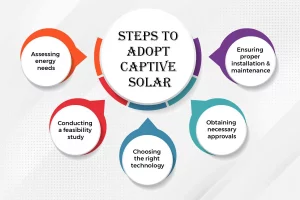
- Assessing energy needs
- Conducting a feasibility study
- Choosing the right technology
- Obtaining necessary approvals
- Ensuring proper installation and maintenance
Choosing the right partner
After understanding all the above information, the first thing that will come to your mind is which partner you should choose. While there are several options in the market, Novergy Solar stands out by offering top-notch services, excellent product quality, competitive pricing, and optimal ROI.
Conclusion: Captive Solar Power Plant
The reasons for switching to Captive solar energy are endless, cost-effective, maximum ROI, and many more. For your industry, buying captive solar power can be a vast pool of opportunities.
If you have any queries, contact Novergy Solar’s team to learn more!
FAQs: Captive Solar Power Plant
1. What is a captive solar plant?
Ans: A captive solar power plant is a solar energy system created to generate electricity primarily for the owner.
2. What is an example of a captive power plant?
Ans: A captive power plant is a facility that supplies an energy user with a localised source of power. Industrial plants, huge offices, and data centres are common examples.
3. What is the difference between a CPP and an IPP power plant?
Ans: IPPs generate electricity for sale to the grid, while CPPs generate electricity primarily for their own use within an industrial or business entity.
4. What is the difference between captive and group captive?
Ans: In a captive plant, a single company owns and consumes the power for its own use. A group captive plant works similarly, but multiple consumers come together to set it up, and each participant must hold at least 26% equity in the project and collectively consume at least 51% of the electricity generated.
5. How many captive power plants are there in India?
Ans: India’s 72.8 GW captive capacity across nearly 2,900 large plants of 1 MW+ capacity.
Get product details