

In our ever-evolving quest for sustainable energy solutions, solar microgrids have emerged as a beacon of promise. But what exactly are they, and how do they function? Join us on an illuminating journey as we unravel the intricacies of microgrid solar technology and explore its role in revolutionizing the energy landscape.
In this blog, we’ll guide you through the fundamental principles behind solar microgrids, shedding light on their components, operation, and benefits. Prepare to deepen your understanding of this innovative approach to power generation and distribution.
What is a Solar Microgrid?
A solar microgrid is a localized energy system that integrates solar PV panels, energy storage devices (such as batteries), and often other renewable energy sources like wind or hydroelectric power. Unlike traditional centralized power grids, which distribute electricity over long distances from large power plants, solar microgrids operate on a smaller scale and are typically designed to serve specific communities, buildings, or even individual households.
How Solar Microgrids Work?
- High-quality solar panels, such as monocrystalline panels with an efficiency of greater than 24%, are used to capture energy from the sunlight. These panels consist of photovoltaic cells that convert sunlight into direct current (DC) electrical energy.
- The DC electricity generated by the solar panels is then regulated and controlled by a solar charge controller. This device ensures that the voltage and current of the electricity are at the appropriate levels to avoid damaging the microgrid’s equipment.
- Energy from the solar panels is transferred to a combiner box, which serves several functions. It protects the rest of the system, reduces energy loss, and consolidates the energy produced into a single connection. The combiner box also allows for monitoring of the microgrid’s performance.
- The DC electricity is then converted into alternating current (AC) through an inverter. This conversion is necessary because most appliances and equipment use AC power. The inverter makes the energy suitable for powering households, businesses, and other applications.
- In some solar microgrids, excess energy not immediately consumed can be stored in batteries for later use. This allows for energy independence, reduces reliance on the main grid, and provides power during periods when solar production is low. Additionally, excess energy can be fed back into the main grid for credit or compensation in certain systems.
- The electricity leaving the inverter is typically measured by meters, which track the usage of individual users or the community. These meters help determine the pricing for each user and monitor energy consumption.
- Electricity produced by the microgrid is distributed to end users, such as households, businesses, and other facilities, to meet their energy needs. It can power various devices, machinery, and appliances.
- Many solar microgrids have the capability to connect or disconnect from a larger grid as needed. This flexibility allows users to efficiently access power from the microgrid or the main grid, enhancing reliability and resilience.
Key Components of a Solar Microgrid
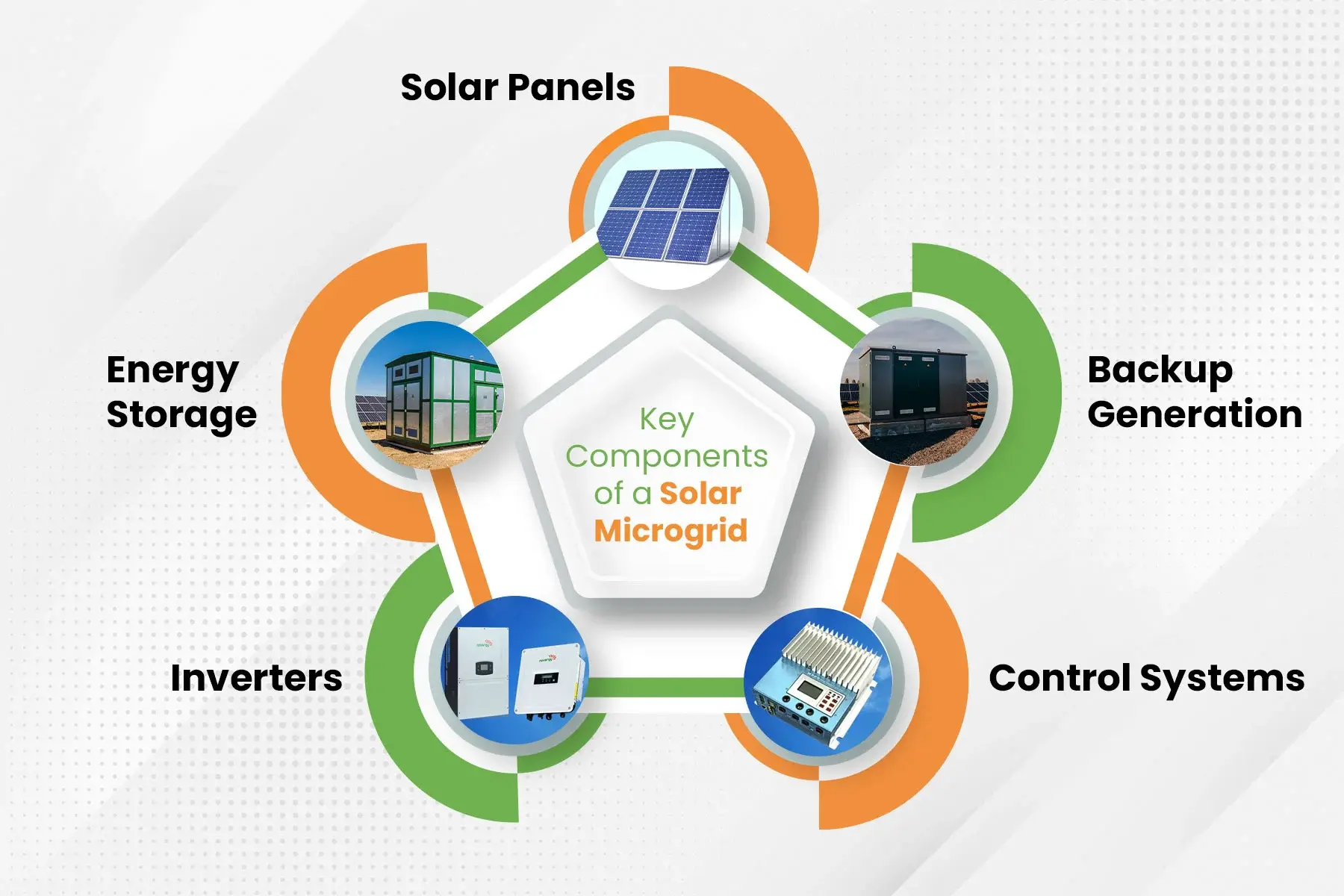
- Solar Panels: Photovoltaic (PV) panels convert sunlight into electricity. These panels are typically installed on rooftops or in nearby open spaces where they can capture sunlight efficiently.
- Energy Storage: Batteries or other storage technologies are used to store excess energy generated by the solar panels during periods of high sunlight. This stored energy can then be used when sunlight is limited, such as at night or during cloudy weather.
- Inverters: Inverters are devices that convert the direct current (DC) electricity generated by the solar panels into alternating current (AC) electricity, which is used to power most household appliances and devices.
- Control Systems: Smart control systems monitor and manage the flow of electricity within the microgrid, optimizing energy production and distribution based on demand and resource availability.
- Backup Generation: In some cases, backup generators fueled by diesel or other conventional fuels may be included in the microgrid to provide additional power during periods of high demand or when renewable energy sources are unavailable.
Advantages of Microgrids:
- Increased Energy Independence: Microgrids empower communities, businesses, and even individuals to generate their own electricity, reducing dependence on centralized power grids. This autonomy ensures a more reliable energy supply, especially in remote areas or during grid failures.
- Reduced Reliance on Fossil Fuels: By integrating renewable energy sources such as solar, wind, and hydroelectric power, microgrids lessen reliance on fossil fuels. This shift towards cleaner energy not only mitigates climate change but also reduces exposure to volatile fossil fuel prices.
- Improved Energy Security: Microgrids enhance energy security by offering decentralized energy generation and distribution. In cases of natural disasters or cyber-attacks that disrupt the main grid, microgrids can operate independently, ensuring continuous power supply to critical facilities like hospitals, military installations, and emergency shelters.
- Lower Energy Costs: Microgrids enable more efficient energy management and utilization, leading to cost savings for users. By leveraging local renewable resources and optimizing energy distribution, microgrids can reduce transmission losses and peak demand charges, ultimately lowering electricity bills for consumers.
- Environmental Benefits: The adoption of microgrids promotes a greener energy transition by reducing carbon emissions and pollution associated with traditional energy sources. With renewable energy integration and energy-efficient technologies, microgrids contribute to cleaner air, water, and land, fostering sustainable development and environmental stewardship.
How Can Solar Microgrids Be Used?
Businesses:
- Cost-Efficient Operations: Solar microgrids empower businesses to reduce energy costs significantly. By harnessing solar energy, companies can offset reliance on traditional grid electricity, thus cutting down operational expenses.
- Reliable Power Supply: Ensuring uninterrupted power is crucial for businesses. Solar microgrids provide a reliable alternative or supplement to conventional grids, minimizing the risk of power outages and ensuring continuous operations.
- Environmental Sustainability: Adopting solar microgrids aligns with corporate sustainability goals, demonstrating a commitment to reducing carbon footprints and promoting eco-friendly practices.
- Energy Independence: By generating their electricity, businesses can mitigate the impact of fluctuating energy prices and reduce dependency on centralized power systems, enhancing their energy independence and resilience.
Communities:
- Energy Access: Solar microgrids play a pivotal role in providing electricity to communities in remote or underserved areas where conventional grid infrastructure is lacking. They bridge the energy access gap, improving the quality of life and fostering socio-economic development.
- Empowerment: Communities equipped with solar microgrids gain control over their energy resources, empowering residents to actively participate in energy management, decision-making, and potentially even revenue generation through surplus energy sales.
- Disaster Resilience: In areas prone to natural disasters, solar microgrids offer a decentralized energy solution that can function independently of the main grid, ensuring vital services remain operational during emergencies.
- Community Development: Beyond electricity provision, solar microgrids stimulate local economies by creating job opportunities, fostering entrepreneurship in the renewable energy sector, and supporting the development of ancillary services.
Remote Areas:
- Off-Grid Solutions: Solar microgrids serve as lifelines for remote areas disconnected from centralized power grids. They enable these regions to access electricity for lighting, communication, healthcare, education, and other essential services.
- Resource Abundance Utilization: Many remote areas have abundant solar resources. Solar microgrids capitalize on this potential, tapping into renewable energy sources readily available in these locations to meet energy needs sustainably.
- Cost-Effective Infrastructure: Building traditional grid infrastructure in remote areas can be prohibitively expensive. Solar microgrids offer a more cost-effective alternative, requiring less upfront investment and shorter implementation times.
- Environmental Preservation: By leveraging solar energy, remote communities can reduce reliance on diesel generators or other fossil fuel-based power systems, contributing to environmental conservation efforts and mitigating the impact of climate change on fragile ecosystems.
Difference Between Solar And Solar Microgrids
Solar Energy:
- Utility Scale: Solar energy refers to large-scale solar installations designed to generate electricity for utility-scale distribution. These installations can range from solar farms covering acres of land to vast arrays of solar panels on rooftops.
- Grid Integration: Typically, solar energy systems are integrated into existing power grids. The electricity generated by solar panels is fed into the grid, supplementing or replacing power generated by traditional fossil fuel sources.
- Centralized Control: Management and control of solar energy systems at this scale are usually centralized, with monitoring and maintenance performed by utility companies or large-scale operators.
- Grid Dependence: Solar energy systems tied to the grid rely on it for stability and backup power during periods of low sunlight or high demand.
Solar Microgrids:
- Localized Power Generation: Solar microgrids are smaller-scale energy systems that generate electricity for localized areas, such as neighborhoods, communities, or individual facilities like hospitals or schools.
- Grid Independence: Unlike utility-scale solar, microgrids can operate independently of the main power grid. This independence offers resilience and reliability, especially in remote areas or during grid outages.
- Decentralized Control: Control and management of solar microgrids are decentralized, often managed by the community or facility they serve. This allows for greater autonomy and tailored energy management strategies.
- Storage Integration: Solar microgrids often incorporate energy storage solutions, such as batteries, to store excess energy generated during sunny periods for use during cloudy days or at night.
People Also Read: What is an on-grid and off-grid solar system?
How Many Solar Powered Villages In India?
Shri R.K. Singh, Minister of State (Independent Charge) for Power and New & Renewable Energy, told the Lok Sabha in a written reply that under the Solar Off-Grid and Decentralized Applications Programme, 63 solar micro-grids with a combined capacity of 1,899 kWp have been installed across the country with financial support from the Ministry of New & Renewable Energy (MNRE).
Singh noted that MNRE provides financial support covering 30% of the cost of micro/mini-grid systems installed in these regions, with system capacity planned according to local demand.
The Future Of Solar Microgrids
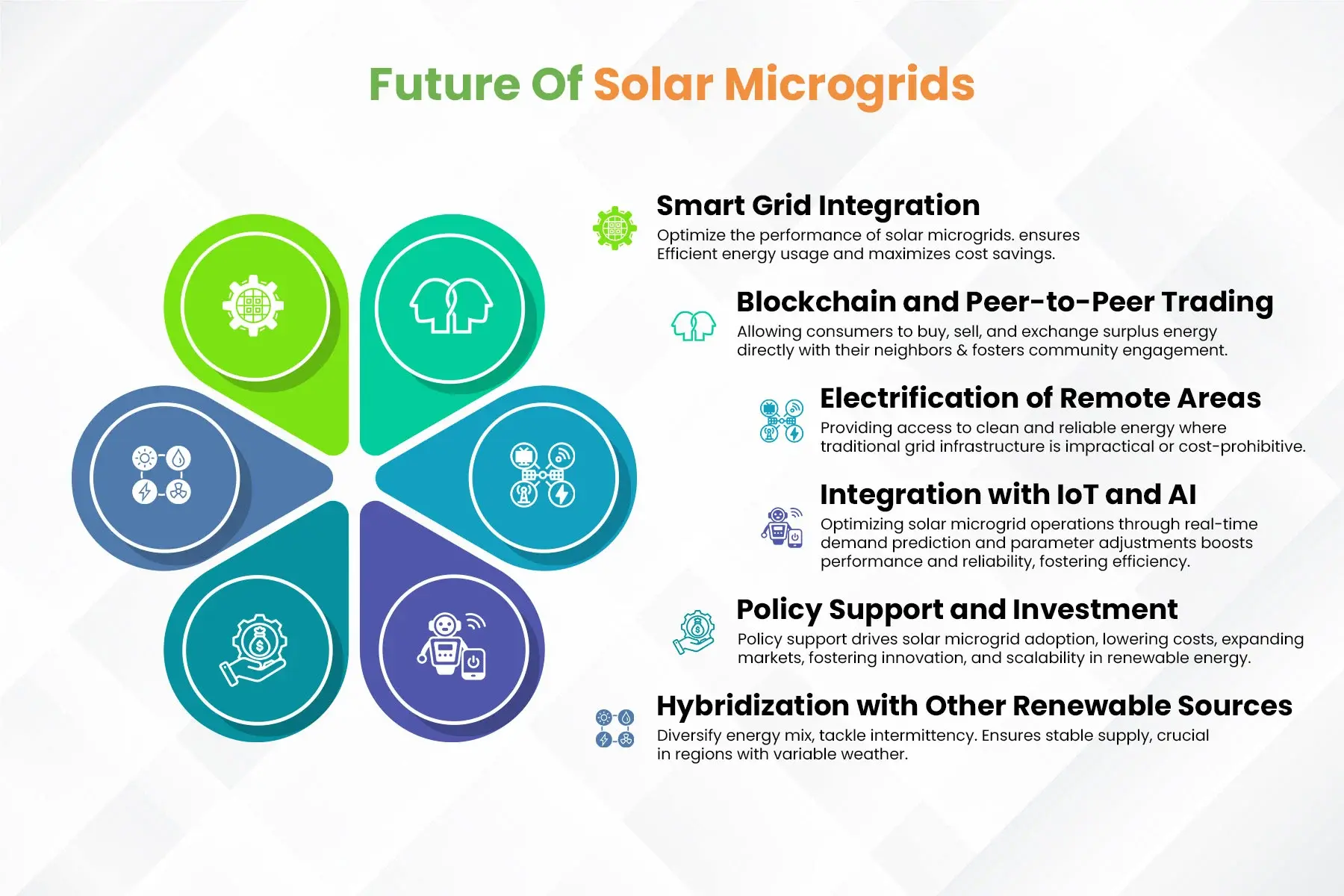
- Smart Grid Integration: Integration with smart grid technologies will optimize the performance of solar microgrids by enabling real-time monitoring, predictive maintenance, and dynamic load management. This intelligent coordination ensures efficient energy usage and maximizes cost savings for consumers.
- Blockchain and Peer-to-Peer Trading: Blockchain technology will facilitate peer-to-peer energy trading within microgrid networks, allowing consumers to buy, sell, and exchange surplus energy directly with their neighbors. This democratized energy marketplace promotes energy autonomy and fosters community engagement.
- Electrification of Remote Areas: Solar microgrids will play a pivotal role in electrifying remote and underserved regions, providing access to clean and reliable energy where traditional grid infrastructure is impractical or cost-prohibitive. This drives socio-economic development and improves quality of life for millions worldwide.
- Integration with IoT and AI: Integration with Internet of Things (IoT) devices and artificial intelligence (AI) algorithms will optimize solar microgrid operations by predicting energy demand, adjusting system parameters in real-time, and identifying opportunities for efficiency improvements. This synergy enhances system performance and reliability.
- Hybridization with Other Renewable Sources: Hybridization of solar microgrids with other renewable energy sources, such as wind and hydro, will further diversify the energy mix and mitigate intermittency challenges. This hybrid approach ensures a more stable and resilient energy supply, especially in regions with variable weather patterns.
- Policy Support and Investment: Continued policy support and investment incentives from governments and stakeholders will accelerate the adoption of solar microgrids, driving down costs and expanding market penetration. This creates a favorable environment for innovation and scalability in the renewable energy sector.
Challenges And Opportunities
Challenges:
- Grid interconnection rules: Regulations for connecting microgrids to the main grid vary by state in India, and approval timelines can affect project planning. Working with an experienced partner who understands local discom requirements helps avoid delays.
- Storage costs: Battery storage remains a meaningful part of a microgrid’s total cost, particularly for sites that need extended backup during outages. Right-sizing storage capacity to actual load patterns is key to a sound investment.
- Load forecasting: Businesses with variable or seasonal power demand need accurate load modeling upfront, since an undersized or oversized system both erode returns.
- Maintenance and monitoring: Microgrids involve more moving parts than a standard grid-tied system — inverters, storage, and control systems all need ongoing monitoring to perform reliably over their lifespan.
Opportunities:
- Energy independence: A well-designed microgrid reduces a facility’s exposure to grid outages and tariff volatility, which matters most for operations that can’t tolerate downtime.
- Scalability: Microgrid systems can be expanded in phases as a business grows, rather than requiring the full investment upfront.
- Integration with EVs and BESS: As more businesses add EV fleets and battery storage, microgrids are increasingly built to manage all three: generation, storage, and consumption, as one coordinated system.
- Long-term reliability: With 19 years of experience deploying solar systems across India, Novergy designs microgrids built for consistent performance, not just initial installation.
Ready to power up your world with clean, sustainable energy? Learn more about Novergy solar solutions. Get in touch today to power up your energy needs! Contact us now.
Parting Thoughts
Solar microgrids offer a promising solution for decentralized energy generation, enabling communities and businesses to harness renewable energy efficiently. Through the integration of solar panels, energy storage systems, and smart grid technologies, microgrids can enhance energy resilience, reduce carbon emissions, and provide reliable power in remote or underserved areas. As we continue to advance in renewable energy technologies, the widespread adoption of solar microgrids holds great potential in fostering a sustainable and resilient energy future for all.