

Introduction: TOPCon Solar Panel
If you have been shopping for solar lately, you have probably heard the term TOPCon everywhere. It sounds like confusing engineering jargon, but once you strip away the acronym, the concept is simple.
In this guide, we will break down what TOPCon solar panels actually do, why they are currently dominating the Indian market, and which TOPCon solar panel manufacturer you should choose for your next project.
What Is a TOPCon Solar Panel?
TOPCon stands for Tunnel Oxide Passivated Contact. While the name is a bit confusing, the goal is straightforward: increasing the efficiency of solar cells.
Where the Efficiency Gain Comes From
Standard solar panels inevitably lose some energy during the conversion process. A Topcon solar panel uses an ultra-thin layer of silicon oxide within the cell structure. This layer plugs the “leaks” in energy flow, allowing more sunlight to convert into usable electricity for your home or office.
N-Type vs. P-Type
Most traditional solar panels use P-type silicon. However, TOPCon technology relies on N-type silicon. N-type Vs. P-type: The big difference? N-type panels use silicon that handles high temperatures much better than P-type and degrades more slowly. For anyone living in India, where summer heat can destroy the output of older panels, this makes a massive difference in year-over-year performance.
Why Is This Tech Suddenly Everywhere in India?
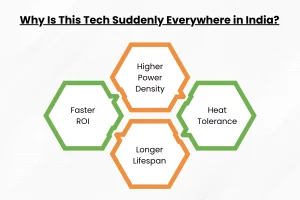
You might wonder why everyone has shifted to this technology so quickly. The numbers speak for themselves:
- Higher Power Density: You get more electricity from the same rooftop space.
- Heat Tolerance: They maintain high output even when the mercury rises in states like Rajasthan or Gujarat.
- Longer Lifespan: Because they degrade more slowly, your energy production stays high well past the 15-year mark.
- Faster ROI: Since they produce more power per square foot, your system pays for itself faster, providing a great ROI on panels.
According to MNRE’s ALMM data, TOPCon now makes up nearly 89% of approved module manufacturing capacity in India. Furthermore, a 2026 manufacturing report by Mercom India highlights that while module capacity has surged tenfold since 2021, the focus is now squarely on high-efficiency cell tech. If you are comparing setups, it is smart to browse rooftop solar options before finalizing your brand.
Top 5 TOPCon Manufacturers Worth Knowing
When selecting a Topcon solar panel manufacturer, you need a brand that won’t disappear in five years. Here are the top players in the Indian market:
1. Novergy Solar
Nineteen-plus years in, and Novergy Solar (Rajasthan-based) has quietly become one of the more dependable names in this space, with panels built to survive Indian weather without falling apart on the warranty claims side.
What actually sets them apart isn’t just the panel spec sheet. They cover rooftop systems, large plants, solar lighting, water pumping, telecom power, basically the full spread, and they’re upfront about their warranty and after-sales terms before you even sign anything.
Customers keep saying the same thing in reviews: Novergy doesn’t disappear after the sale. Given solar is a two-decade bet, that follow-through counts for something. If experience, fair pricing, and actual support matter to you, this is the one to start with.
2. Waaree Energies
Based in Gujarat, Waaree is one of the largest players by volume in India. They are the go-to for many large project developers because of their sheer manufacturing scale and extensive service network across the country.
3. Vikram Solar
Kolkata-based Vikram Solar was one of the first in India to invest heavily in TOPCon research. They are primarily focused on utility-scale projects and have a massive footprint in both domestic and international markets.
4. Adani Solar
Operating a massive integrated plant in Mundra, Adani Solar brings the financial backing of a major group. For many, this vertical integration provides peace of mind regarding long-term warranty fulfillment and supply chain traceability.
5. Premier Energies
Based in Hyderabad, they have grown rapidly by focusing on sustainable manufacturing processes and integrated cell-to-module production lines. They are recognized as early adopters of TOPCon cell manufacturing in India.
Picking the Right Manufacturer: The Selection Checklist
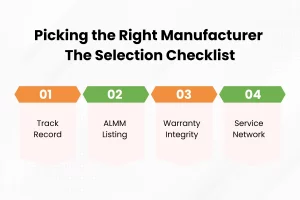
Don’t just chase the lowest price. Use this checklist to filter out the noise:
- Track Record: Does the company have a history of real-world installations?
- ALMM Listing: Check the MNRE website to ensure the brand is on the Approved List of Models and Manufacturers.
- Warranty Integrity: Is the warranty document clear, and is the company reachable?
- Service Network: A panel is useless if the manufacturer ghosts you when an inverter hiccup occurs.
Feature | What to look for |
Technology | Ensure it is genuine N-Type TOPCon |
| Compliance | Must have BIS and ALMM certification |
| Efficiency | Compare the temperature coefficient across brands |
Conclusion: Topcon Solar Panel Manufacturers
As the solar industry is evolving, industries and businesses are understanding the need for TOPCon Solar Panels due to their higher efficiency, better performance in high temperatures, and long-term reliability.
Before making the big investment, it’s important to understand which manufacturer is best for your needs, as it directly impacts your system’s performance, lifespan, and return on investment.
Novergy Solar offers advanced TOPCon solar panels backed by nearly two decades of industry expertise, comprehensive EPC solutions, and dedicated after-sales support. Contact Novergy Solar today to find the right TOPCon solar solution for your business and maximize your long-term energy savings.
FAQs: Topcon Solar Panel Manufacturers
1. Are TOPCon panels worth the extra cost?
Ans: Yes. While the upfront price is slightly higher, the lifetime output and slower degradation mean your savings are much higher in the long run.
2. Can I use these for a home rooftop?
Ans: Absolutely. Many manufacturers, including Novergy, provide specialized residential kits that utilize this high-efficiency technology.
3. Do these panels really handle Indian summers?
Ans: Yes. Because of their low temperature coefficient, they lose significantly less efficiency when it gets hot compared to older panels.
Get product details