

Introduction
Imagine your solar power staying on, even after sunset. Or operations running smoothly, even when the wind isn’t blowing. This is becoming a reality thanks to a remarkable technology: the Battery Energy Storage System (BESS).
As India moves towards a greener future with solar and wind power, reliable energy storage is vital. BESS acts as a bridge, connecting when clean energy is made to when it’s needed. This blog explains what a BESS is, its benefits, and why battery energy storage system manufacturer in India is a game-changer for our nation’s energy independence.
What is a Battery Energy Storage System (BESS)?
A Battery Energy Storage System (BESS) is like a large, smart rechargeable battery for your electricity. It stores electrical energy from sources like solar panels or the grid, keeping it ready for when you need it most.
For example, when your solar panels generate extra power on a sunny afternoon, a BESS stores it. Then, after dark, during a power cut, or when electricity is expensive, your BESS releases this stored energy. This allows us to use clean energy effectively, 24/7.
The Key Parts of a Battery Energy Storage System (BESS)
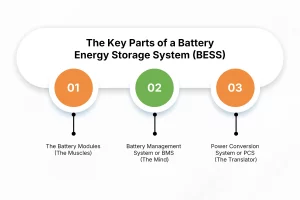
The system uses muscles and the mind to handle high voltages, so that it runs safely.
1. The Battery Modules (The Muscles)
This is where the electricity lives. Most high-end units use lithium-ion tech. By 2026, lithium battery costs have dropped drastically, making these high-capacity units a smart purchase for smart businesses.
2. Battery Management System or BMS (The Mind)
The BMS is your safety guard. It watches every single cell for heat or voltage spikes. If you choose the right solar developer, they will ensure your Battery Energy Storage System (BESS) has a top-tier BMS that prevents overheating before it happens.
3. Power Conversion System or PCS (The Translator)
Batteries speak “DC” (direct current), but your computers and machines speak “AC” (alternating current). The PCS translates the power instantly so your gear never knows the difference.
How Does a BESS Work Its Magic?
The working of a BESS is straightforward, making it highly effective for modern energy:
- Charging: The BESS charges when electricity is available, perhaps from solar panels during the day or cheaper grid power at night. The power converter prepares this energy for storage.
- Storing: Energy remains stored. The battery manager constantly monitors its health and charge level.
- Discharging: When power is needed, the BESS releases energy. The power converter turns stored energy into usable electricity for your home or business. The energy manager intelligently decides the best discharge times.
This cycle helps BESS bridge the gap between energy supply and demand, making intermittent renewable sources like solar and wind more reliable.
Benefits of a Battery Energy Storage System (BESS)
Investing in a BESS offers many advantages for homes, businesses, and India’s electricity grid:
- Reliable Backup Power: A BESS provides crucial backup during power outages, keeping essential operations running and ensuring peace of mind.
- Lower Electricity Bills and Cost Savings:
- Peak Shaving: Store cheaper energy during off-peak hours and use it during expensive peak times, cutting bills.
- Energy Arbitrage: Buy electricity when prices are low and use or sell it back when prices are high, leading to significant savings.
- Maximize Solar Energy Use: Store surplus solar power generated during the day for later use, boosting self-consumption and reducing reliance on grid power.
- Increased Energy Independence: Generate and store your own electricity, gaining more control over your energy supply and costs.
- Environmental Benefits: Maximize clean energy use, reduce fossil fuel reliance, and lower your carbon footprint, contributing to a greener India.
- Grid Stability: On a larger scale, BESS units help stabilize the grid by managing excess power or filling supply gaps, preventing blackouts.
- Support for Renewables: BESS is crucial for integrating intermittent renewable energy sources, making them reliable 24/7 for India’s ambitious goals.
- Scalability: BESS solutions are flexible. Start small and expand as your energy needs grow, suitable for homes, businesses, and large projects.
- Enhanced Property Value: Installing a BESS with solar can increase property value, attracting buyers who prioritize sustainability and energy independence.
The Rise of Battery Energy Storage System Manufacturing in India
India recognizes the strategic importance of battery energy storage system manufacturers in India. With ambitious renewable energy targets, a strong domestic manufacturing base for BESS is crucial for energy security, job creation, and economic growth.
The government actively promotes local manufacturing through policies and incentives, leading to:
- Reduced Import Dependency: Less reliance on foreign technology.
- Job Creation: Thousands of new jobs in manufacturing, R&D, and installation.
- Cost Reduction: Local production helps bring down BESS costs, making them more accessible.
- Technological Advancement: Encourages local innovation for better, India-specific solutions.
- Supply Chain Resilience: A local supply chain is less vulnerable to global disruptions, ensuring steady availability.
This focus on battery energy storage system manufacturers in India signals a long-term commitment to BESS as a cornerstone of India’s energy future.
Applications of BESS for Businesses in India: Beyond Backup Power
For businesses, a BESS is a strategic asset for optimizing energy, cutting costs, and boosting sustainability. Key applications include:
- Industrial Units and Factories: Manage demand charges by using stored energy during peak hours. Ensure continuous power for critical operations and maximize rooftop solar use, even at night.
- Commercial Buildings (Offices, Malls, Hospitals): Optimize energy bills through peak shaving. Enhance resilience, crucial for hospitals. Contribute to green building initiatives.
- Data Centers: Provide uninterrupted power (UPS) to prevent data loss. Efficiently manage cooling loads.
- Hotels and Resorts: Ensure guest comfort with continuous power. Reduce high operational costs.
- Agricultural Sector: Offer off-grid solutions for remote farms, powering irrigation, cold storage, and machinery.
The Future of BESS in India
As of March 2026, India has reached 283.46 GW of non-fossil fuel capacity. The future of BESS in India is incredibly promising. Government initiatives, like the target to add over 47 GW of BESS capacity by 2032 (as stated by a Union Minister), highlight this commitment. This massive investment, estimated at ₹3.5 lakh crore, shows the expected growth.
Key trends shaping BESS in India include:
- Growing Renewable Energy Capacity: Increased demand for BESS to ensure grid stability and round-the-clock power.
- Declining Battery Costs: Domestic manufacturing is expected to drive down costs, making BESS more affordable.
- Smart Grid Evolution: BESS will be central to smart grids, improving energy management and supporting microgrids.
- Electric Vehicle (EV) Integration: EV batteries could contribute to grid stability or be repurposed for storage.
- Policy Support: Expect continued incentives and clear regulations.
- Technological Advancements: Ongoing R&D will lead to more efficient and long-lasting batteries.
India is poised to be a global leader in the energy storage revolution, with battery energy storage system manufacturer in India being key to this transformation.
Checklist: Is a BESS Right for You?
Use this quick list to see if your property is ready for a storage upgrade:
- Do you deal with daily voltage drops or power cuts?
- Are your evening electricity bills higher than your daytime costs?
- Do you have enough roof space to generate extra solar power?
- Is your goal to shrink your carbon footprint by 40% or more?
- Does your office use sensitive equipment that crashes during power blips?
How Can Novergy Empower Your BESS Journey?
At Novergy, we understand the critical role BESS plays in maximizing solar energy benefits and achieving true energy independence. As a leading provider of solar solutions in Udaipur, Rajasthan, India, we integrate cutting-edge battery energy storage system technologies into our projects.
Novergy helps your business or home harness the power of BESS by offering:
- Custom-Designed BESS Solutions: We design a BESS perfectly sized for your energy use, existing solar, and operational needs for maximum efficiency.
- High-Quality, Reliable Products: We partner with leading global and Indian manufacturers of advanced battery technologies, ensuring a dependable and long-lasting BESS.
- Seamless Integration with Solar: Our expertise ensures your BESS integrates perfectly with your solar system, maximizing clean power use.
- End-to-End Project Management: From assessment and design to installation and maintenance, Novergy provides comprehensive support.
- Expert Guidance on Regulations and Incentives: Our team stays updated on policies related to BESS and renewable energy in India, helping you maximize financial benefits.
- Optimized Energy Management: We focus on smart BESS solutions that intelligently manage energy flow, ensuring savings and power when needed.
Conclusion: Future of BESS in India
The Battery Energy Storage System (BESS) is now an indispensable part of our energy future. For individuals and businesses across India, a BESS offers unprecedented opportunities for energy independence, cost savings, and a significant reduction in carbon footprint.
With the rapid growth of battery energy storage system manufacturer in India, our nation is well-positioned to lead this critical energy transition. Novergy is proud to be a part of this journey, empowering clients with state-of-the-art BESS solutions that ensure continuous, reliable, and clean power, day and night.
Are you ready to unlock the full potential of your solar energy system and secure your energy future?
Contact Novergy today to learn more about how a customized BESS can benefit you.
FAQs: Applications and Benefits of BESS
1. What is Open Access in BESS?
Ans: Battery Energy Storage System stores extra solar power generated during the day and supplies it back when generation drops, like in the evening.
2. What are the advantages of BESS?
Ans: Here are the advantages of BESS:
- Reliable Backup Power
- Lower Electricity Bills and Cost Savings
- Energy Arbitrage
- Maximize Solar Energy Use
- Increased Energy Independence
- Environmental Benefits
- Grid Stability
- Support for Renewables
- Scalability
- Enhanced Property Value
3. How long does a BESS last?
Ans: Most Tier-1 systems are designed to last 10 to 15 years, depending on how often they get charged and discharged.
Get product details