

Introduction: Understanding the ROI on BESS for Businesses
Battery energy storage systems (BESS) provide energy cost savings and power reliability for businesses, particularly in industries where operations depend on a consistent electricity supply. BESS stores electricity for use when it is needed.
However, investing in BESS involves more than comparing the initial installation cost with potential savings. Factors such as electricity tariffs, peak demand patterns, battery capacity, system efficiency, maintenance requirements, and battery degradation all influence the overall return on investment.
Understanding the ROI on BESS helps businesses determine whether a battery storage system makes financial and operational sense for their facilities. By evaluating potential savings alongside long-term costs and operational benefits, businesses can make more informed decisions about adopting energy storage solutions.
How Does a Battery Energy Storage System Generate Returns?
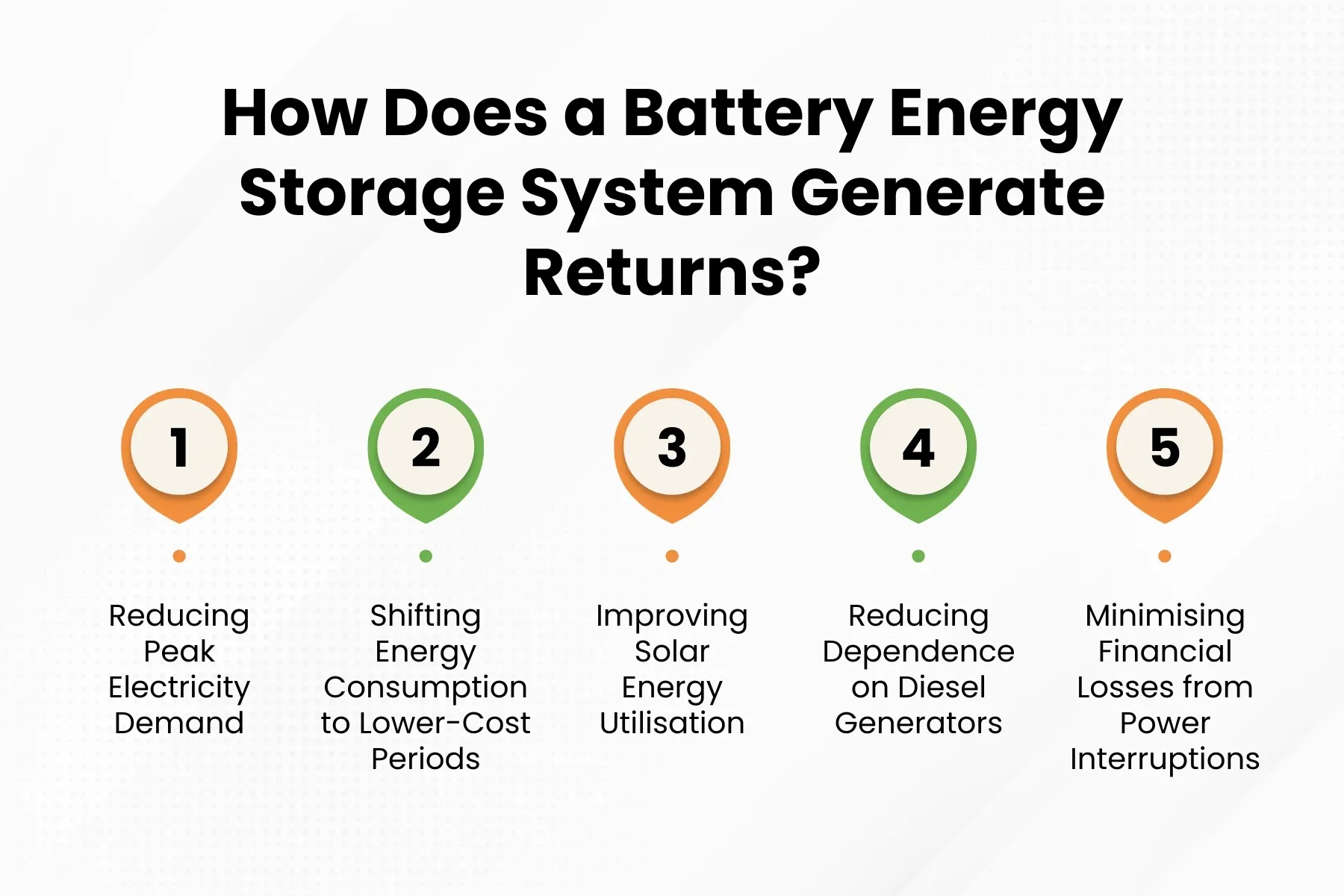
A battery energy storage system stores the excess electricity coming out of the grid for later use, helping the business use energy efficiently whenever possible. Some of the key ways a BESS can generate returns include:
1. Reducing Peak Electricity Demand
During peak seasons, many industrial and commercial businesses experience a rise in electricity consumption, increasing demand-related charges on their electricity bills. A BESS stores energy during these high-demand periods, helping reduce the amount of electricity drawn from the grid. This process, known as peak shaving, can help businesses manage demand charges and optimise their electricity expenses.
2. Shifting Energy Consumption to Lower-Cost Periods
Some grids charge different rates throughout the day; businesses can charge their battery when electricity is relatively inexpensive and discharge it during higher-tariff periods. This approach, commonly known as energy arbitrage, allows businesses to make better use of available electricity tariff differences. The savings in this method usually depend on the tariff structures, battery efficiency, and charging and discharging costs.
3. Improving Solar Energy Utilisation
Businesses with solar already installed can integrate BESS to store surplus solar electricity generated during the day. Instead of depending entirely on immediate consumption or grid export, they can use stored energy during evening hours or periods of limited solar generation. This helps improve the utilisation of on-site renewable energy and can reduce grid electricity consumption.
4. Reducing Dependence on Diesel Generators
Factories use diesel as a backup generator; BESS can be used as part of a hybrid energy system. Depending on the system configuration, stored electricity can help during grid interruptions and reduce generator operating hours.
5. Minimising Financial Losses from Power Interruptions
Unexpected power interruptions can disrupt industrial processes, delay production, damage equipment, and cause financial losses. A properly designed BESS can provide backup power for selected critical loads, helping businesses maintain operational continuity during certain grid disturbances.
Key Factors That Affect ROI on BESS
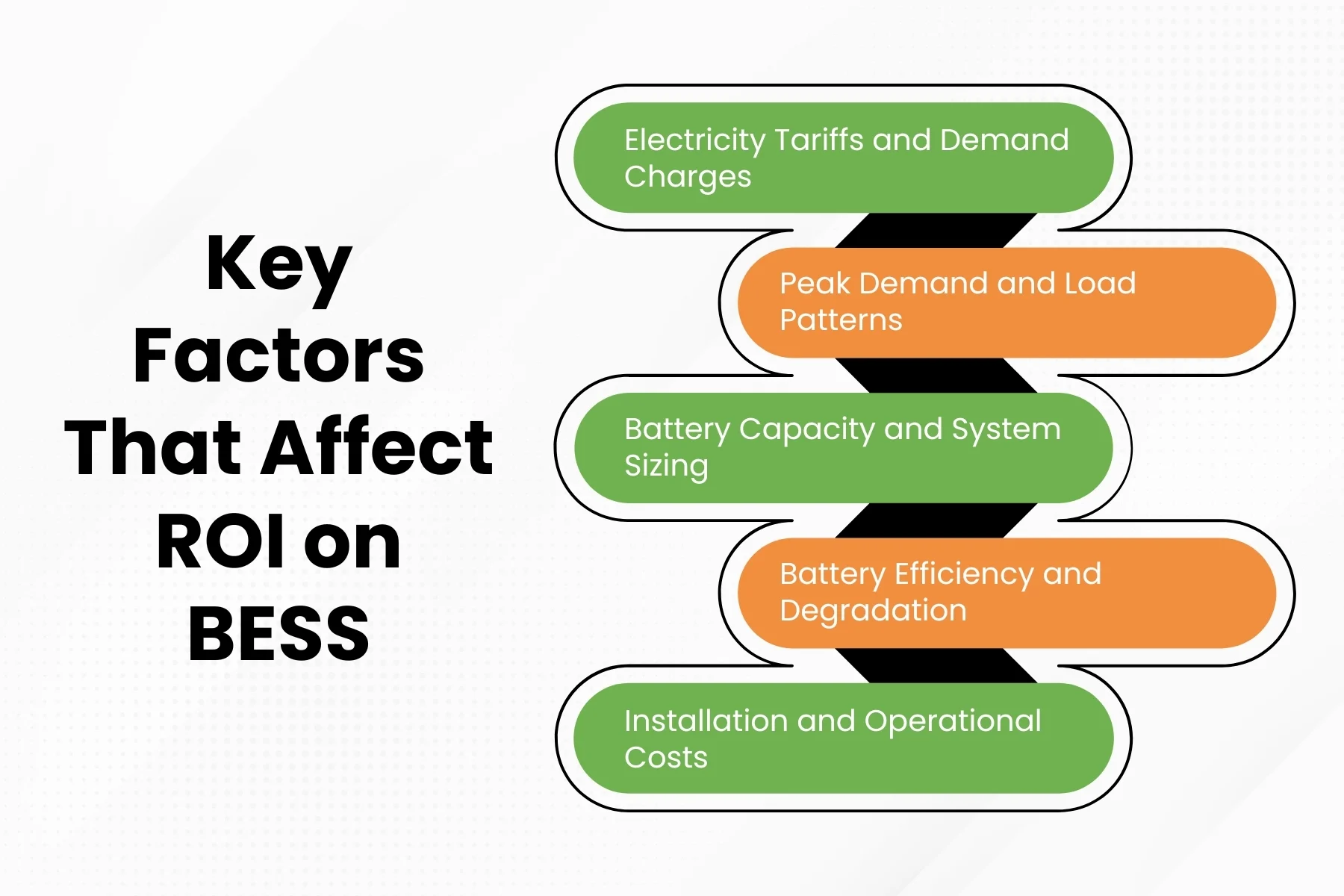
The ROI on BESS depends on several technical, operational, and financial factors. While BESS can help businesses reduce electricity expenses and improve energy management, the actual returns vary based on how the system is designed and used:
1. Electricity Tariffs and Demand Charges
Electricity tariffs vary by time of day and demand. BESS can help in this by storing electricity at the time of low demand or at the time when electricity tariffs are low. By storing electricity during lower-cost periods and using it when tariffs or demand charges are higher, businesses can optimise their energy consumption.
2. Peak Demand and Load Patterns
A business’s electricity consumption pattern plays an important role in determining BESS ROI. Facilities with frequent demand spikes may benefit from using stored energy during periods of high electricity consumption.
3. Battery Capacity and System Sizing
Selecting the right battery capacity and power rating is essential for achieving a suitable return on investment. An undersized system may not provide enough stored energy to meet the facility’s requirements, while an oversized system can increase the initial investment without delivering proportional financial benefits.
4. Battery Efficiency and Degradation
Battery efficiency determines how much of the stored electricity can actually be used after accounting for charging and discharging losses. Higher round-trip efficiency generally allows businesses to recover more usable energy from each charging cycle.
5. Installation and Operational Costs
The initial investment and ongoing operating expenses also influence the overall ROI on BESS. The total project cost may include battery units, power conversion systems, energy management software, electrical infrastructure, installation, and system integration.
How to Calculate the ROI on BESS Investment
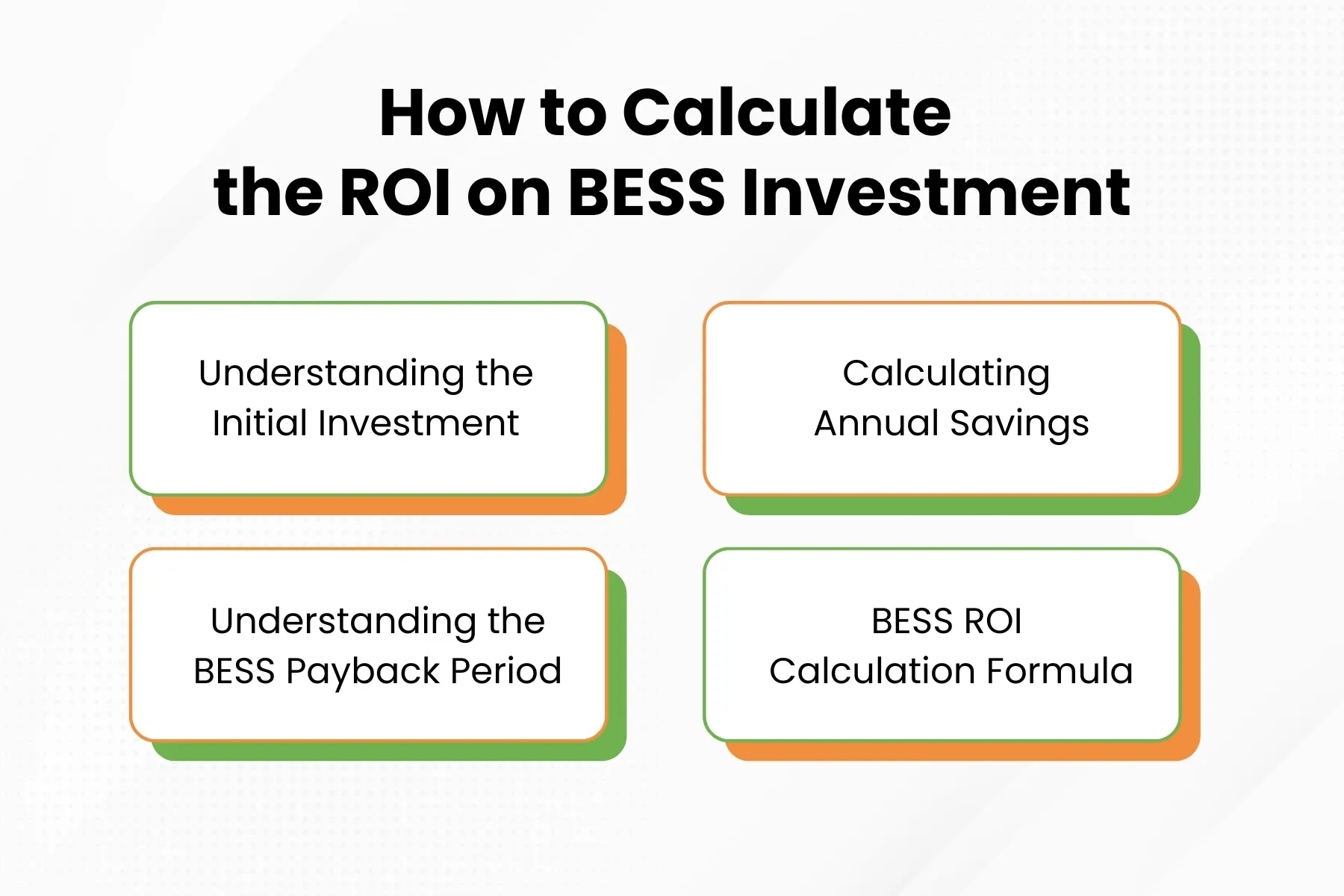
Calculating the ROI on BESS helps businesses understand how much financial value they can generate compared to the cost of installing and operating the system. A practical BESS ROI assessment involves:
1. Understanding the Initial Investment
- Battery Storage Units: The primary cost of storing electrical energy.
- Power Conversion System (PCS): Equipment that manages the conversion of electrical power between the battery and the facility.
- Energy Management System (EMS): Software and controls used to monitor and optimise battery operation.
- Installation and Integration: Electrical connections, infrastructure upgrades, and integration with existing solar or grid systems.
- Monitoring and Safety Equipment: Components required for system monitoring, protection, and safe operation.
2. Calculating Annual Savings
- Peak Demand Reduction: Lowering demand-related electricity charges by using stored energy during peak consumption periods.
- Energy Arbitrage: Charging batteries during lower-tariff periods and discharging them when electricity costs are higher.
- Solar Energy Utilisation: Storing surplus solar electricity for later consumption, reducing dependence on grid power.
- Reduced Diesel Consumption: Lowering generator operating hours and fuel expenses in suitable hybrid applications.
- Avoided Downtime Losses: Supporting critical operations during power interruptions and reducing potential production losses.
3. Understanding the BESS Payback Period
The payback period indicates how long a business may take to recover its initial BESS investment through the financial savings generated by the system.
A simple formula is:
Payback Period = Total Initial Investment ÷ Annual Net Savings
4. BESS ROI Calculation Formula
Businesses can also calculate the annual return on investment using the following formula:

How BESS Adds Long-Term Value Beyond Electricity Bill Savings
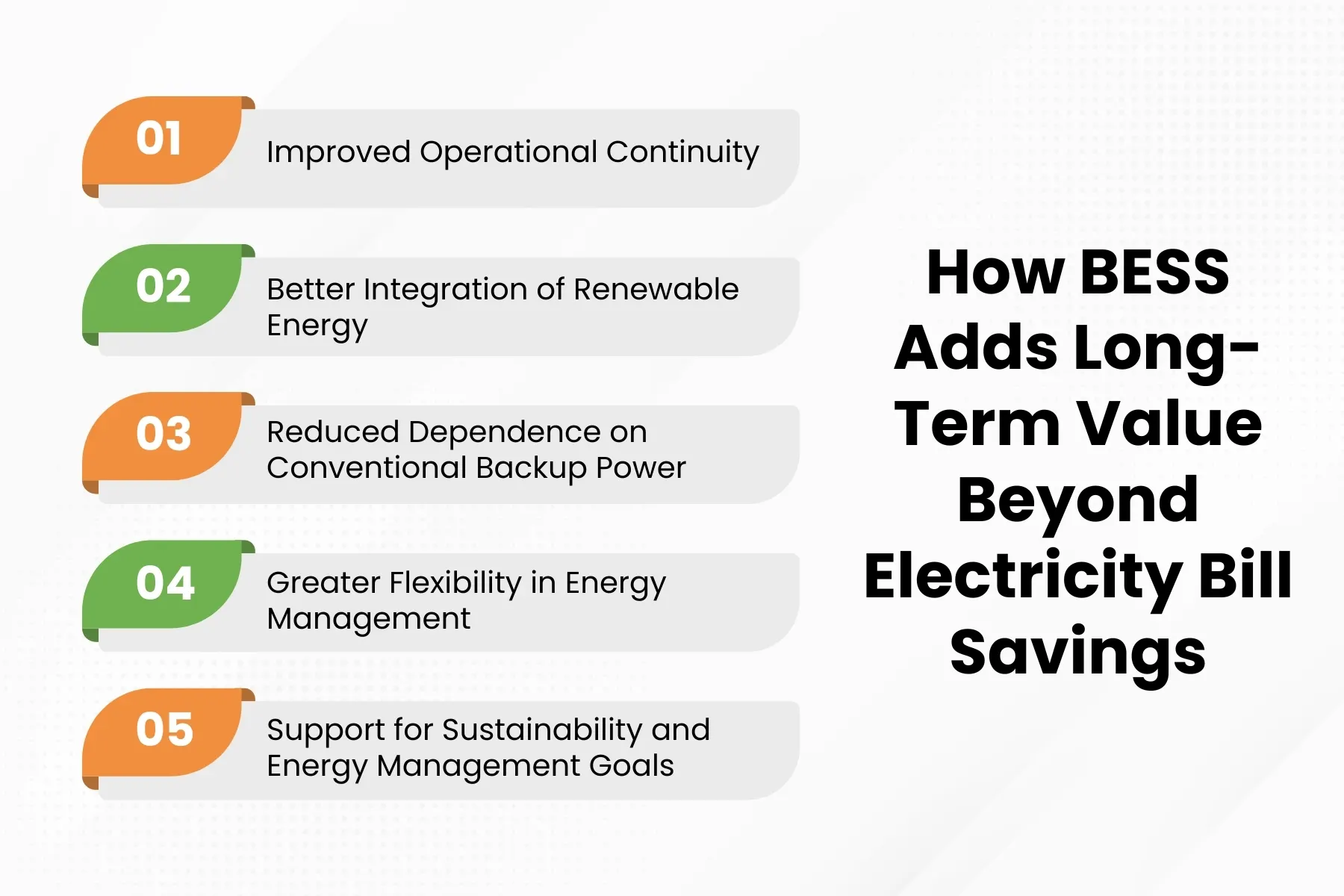
Here are some ways BESS adds long-term value beyond electricity bill savings:
1. Improved Operational Continuity
Unexpected power interruptions can affect production schedules, disrupt business operations, and cause financial losses. A properly designed BESS can provide backup power to selected critical loads during grid disturbances, helping businesses maintain essential operations.
2. Better Integration of Renewable Energy
Businesses investing in solar energy can use BESS to improve how they utilise the electricity generated by their installations. Solar generation is generally highest during daylight hours, while some facilities may have significant electricity requirements during the evening or at other times.
3. Reduced Dependence on Conventional Backup Power
When integrated into a suitable hybrid energy system, BESS can support selected loads and reduce the operating hours of diesel generators. This helps businesses manage backup power more efficiently while potentially lowering fuel consumption and maintenance requirements.
4. Greater Flexibility in Energy Management
Electricity demand can change throughout the day depending on production schedules, equipment usage, and operational requirements. BESS gives businesses greater flexibility to manage these variations by storing electricity when it is available and using it when demand increases.
5. Support for Sustainability and Energy Management Goals
When integrated with solar installations, battery storage can reduce reliance on conventional grid electricity during selected operating periods. It can also contribute to broader sustainability initiatives by supporting cleaner energy management practices.
Conclusion: Making a Smarter BESS Investment Decision
Investing in a Battery Energy Storage System is not just about reducing electricity bills; it is about improving how a business manages and utilises energy over the long term. From peak shaving and better solar energy utilisation to reduced dependence on diesel generators and improved operational continuity, BESS can deliver financial and operational benefits for commercial and industrial facilities.
However, the actual ROI on BESS depends on factors such as electricity tariffs, energy consumption patterns, battery capacity, system efficiency, and long-term operating costs. Businesses should evaluate these factors carefully and consider their specific energy requirements before making an investment decision.
With the right system design and energy management strategy, BESS can become a valuable part of a business’s energy infrastructure. Novergy Solar helps businesses explore suitable battery energy storage solutions based on their operational requirements and energy goals. Contact Novergy to discuss how a BESS solution can support your business’s energy management strategy.
Get product details